Podiatry history taking: first-visit questions
Structure a podiatry interview with open questions, a field checklist and a fictional example separating patient-reported information from examination findings.

Key takeaway
A useful history records why the person is attending, how their concern has changed and which background information matters. Examination findings belong in a separate section. An interview supports professional assessment; it does not establish a diagnosis on its own.
This guide is about organizing a first appointment, not a diagnostic questionnaire or a universal testing protocol. Adapt the questions to the situation, your professional scope and your practice procedures. Confirm identity using the practice process and explain why information is being recorded. Start with an open question so the patient's concern is heard before completing individual fields.
Questions and information to keep distinct
| Area | Example question | Documentation |
|---|---|---|
| Reason for attending | What concerns you, and when did it start? | The person's account, approximate onset and reason for attending now. |
| Context | During which activities do you notice it? | Reported activity, footwear or limitation without assuming a cause. |
| Background | Which health conditions, medicines or allergies may be relevant? | Reported information, its source and outstanding clarification. |
| Previous care | Have you had care for this? What changed afterwards? | Reported interventions, available documents and subsequent changes. |
The process at a glance
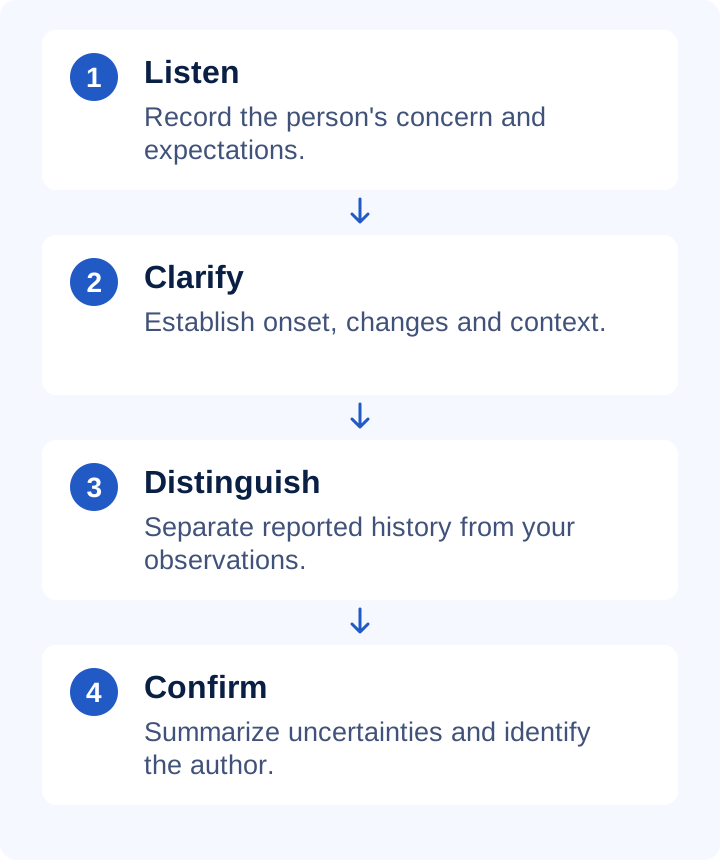
Fictional wording example
Reason for attending: the person reports discomfort in the left foot with particular footwear for approximately two weeks and wants to understand its cause and options. Background: reports taking medication; the list remains to be confirmed. This records what was communicated rather than verified findings. Examination and professional assessment are documented separately with date and author.
Practical checklist
- Hear the concern before selecting a label.
- Identify side and region where supported; do not guess missing details.
- Distinguish not asked, cannot recall and denies: these mean different things.
- Collect information relevant to the care being provided.
- Summarize your understanding and record questions requiring clarification.
What to check in PodoClinix
In PodoClinix, organize the history within the patient record and consult earlier visits. A point on a foot diagram complements a description rather than replacing the interview. Use a fictional identity during your initial trial and check where each part of the record is saved before entering real information.
A detail worth reviewing
Copying a previous history as though it were current can conceal changes. At follow-up, identify what has changed and what was confirmed that day. Attribute information from external reports instead of presenting it as your own observation. The linked UK professional guidance is a reference for record organization, not a substitute for local requirements.
Continue with these guides
- Podiatry progress notes: structure and example
Document a follow-up visit with reported changes, findings, assessment, actions and agreed review. Includes a fictional example and practical checks.
- Podiatry foot diagrams: symbols and colour legends
Make foot-chart observations understandable with laterality, region, colour and text. Includes a working example and an actual PodoClinix screenshot.
- Podiatry and documentation glossary
Check definitions to use terminology consistently.
Sources and scope
- HCPC · Record keeping
Primary reference for the principle identified in this guide. PodoClinix features are described separately from external references.
Examples and checklists are editorial proposals. Adapt the workflow to your practice and local requirements. References are provided for consultation, not as endorsements of PodoClinix.
Frequently asked questions
No. History taking gathers reported information and background; examination records what the professional observes or evaluates. Their sources should remain recognizable.
Run your podiatry clinic with PodoClinix
Clinical records, scheduling, WhatsApp reminders and 3D foot diagnosis. Start free, no card required.
Start free trial