Podiatry progress notes: structure and example
Document a follow-up visit with reported changes, findings, assessment, actions and agreed review. Includes a fictional example and practical checks.

Key takeaway
A progress note explains what happened at a visit and how it relates to earlier care. Identify date and author, distinguish reports from observations and document actual decisions and agreed follow-up.
The aim is not longer notes, but a record another authorized professional can understand. Each new entry should explain what changed or was confirmed at that visit. SOAP can organize the content, but it is not a universal requirement or a guarantee of adequate documentation. This is a documentation example, not a diagnosis or treatment recommendation.
A reviewable follow-up structure
| Section | Include | Avoid |
|---|---|---|
| Subjective | Changes reported since the previous visit. | Presenting a report as your own measurement. |
| Objective | Findings and measurements actually obtained. | Copying values not checked today. |
| Assessment | Professional interpretation of available information. | Presenting uncertainty as a confirmed diagnosis. |
| Plan | Actions performed, information shared and agreed follow-up. | Recording a proposed action as completed. |
The process at a glance
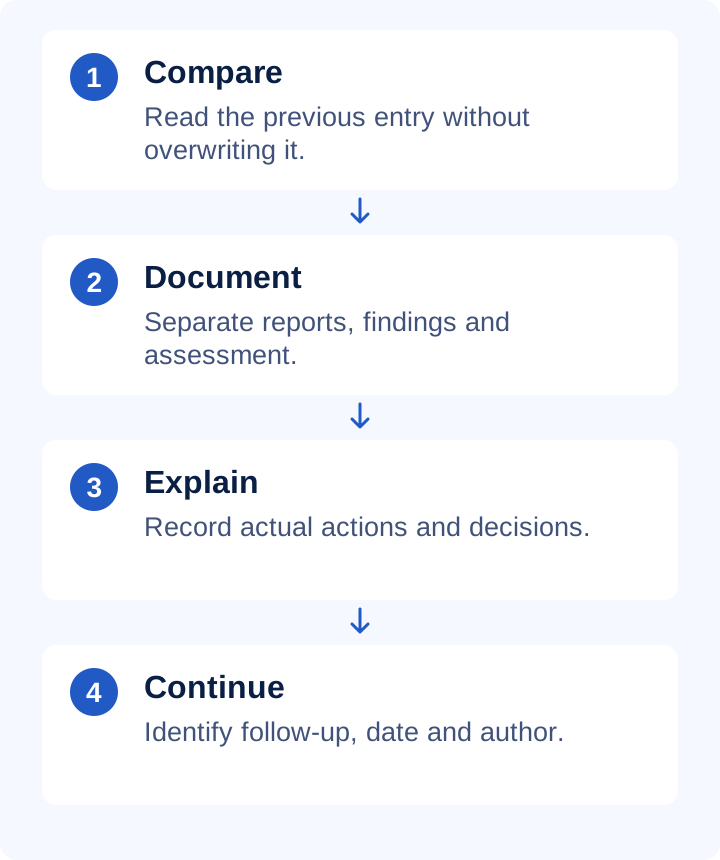
Fictional follow-up example
Visit 2. The person reports less discomfort in their usual footwear since the previous visit. Record the region examined and today's actual findings in the relevant section. Document the explanation, professional assessment and agreed decision, including review arrangements if circumstances change. Link the photograph taken at this visit with its clinical date and identify the responsible professional. Fill these sections with actual care information; this example supplies no findings or treatment to copy.
Practical checklist
- Check the correct patient and visit.
- Distinguish care date and entry date if different.
- Explain what changed since the previous assessment.
- Identify attachments by visit and region, not filename alone.
- Keep earlier entries and follow the practice correction procedure.
What to check in PodoClinix
PodoClinix supports reviewing patient history and documenting care and treatments performed. Test two fictional visits before choosing a note format: the second should let you find the first and understand the sequence. Confirm how notes, attachments and professional identification are saved.
A detail worth reviewing
'Improved' leaves important questions: according to whom, compared with when, and in which respect? Add those references. Do not treat a photograph alone as sufficient evidence of clinical progress; interpret it alongside the note and professional assessment. UK record-keeping guidance linked below should be applied within the requirements of your own jurisdiction.
Continue with these guides
- Podiatry clinical photos: organizing follow-up
Link images and videos to visits with clinical date, region, context and privacy controls. Includes actual PodoClinix patient-file limits.
- Podiatry foot diagrams: symbols and colour legends
Make foot-chart observations understandable with laterality, region, colour and text. Includes a working example and an actual PodoClinix screenshot.
- Podiatry and documentation glossary
Check definitions to use terminology consistently.
Sources and scope
- GMC · Recording your work
Primary reference for the principle identified in this guide. PodoClinix features are described separately from external references.
Examples and checklists are editorial proposals. Adapt the workflow to your practice and local requirements. References are provided for consultation, not as endorsements of PodoClinix.
Frequently asked questions
There is no single structure required in every country and practice. SOAP is one organizational approach; use the format appropriate to your setting and requirements.
Run your podiatry clinic with PodoClinix
Clinical records, scheduling, WhatsApp reminders and 3D foot diagnosis. Start free, no card required.
Start free trial